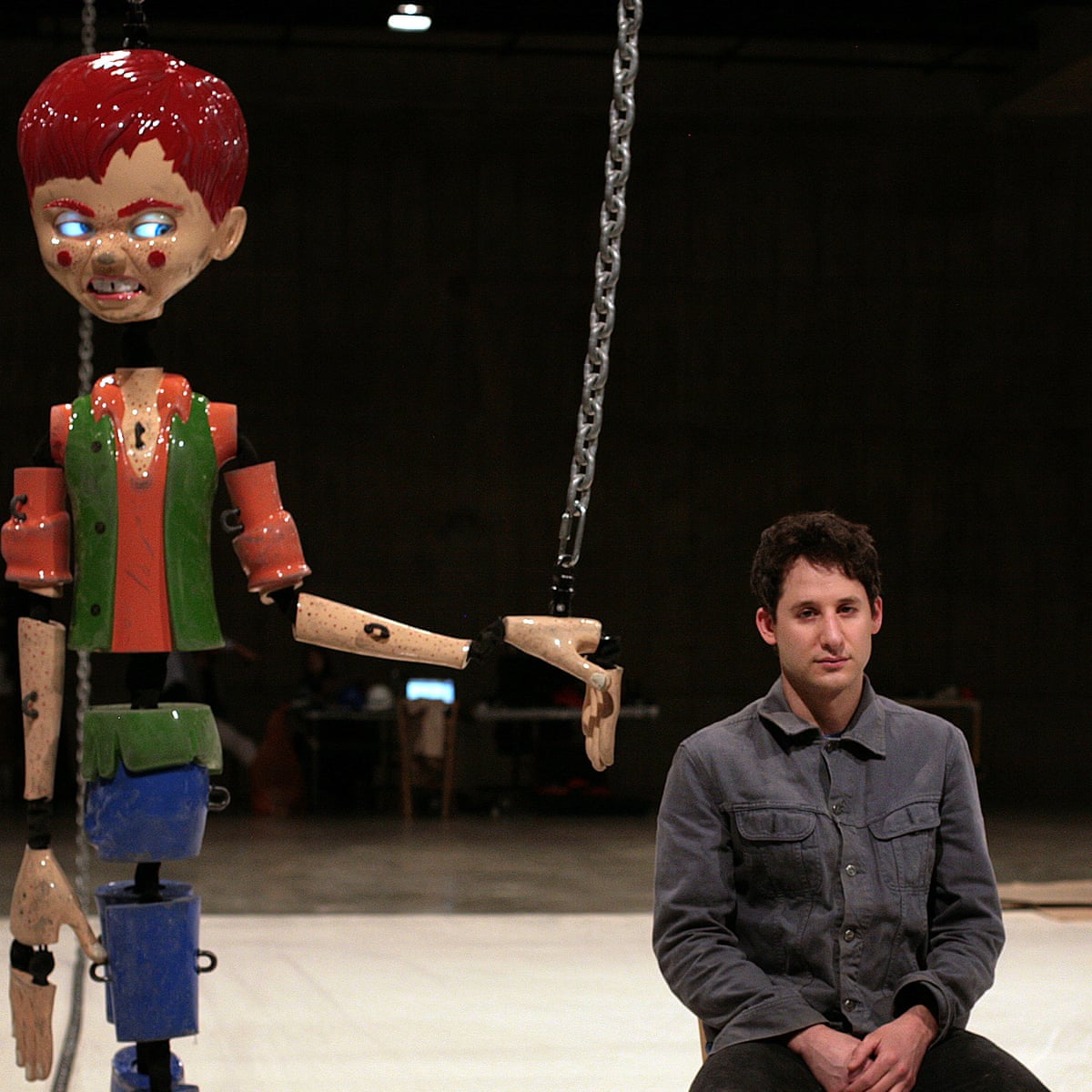
Ed Atkins – The Melancholy of the Digital Body and the Autopsy of the Virtual Era
Often viewed through the technical lens of pioneering video art, Ed Atkins is, in fact, our era's most ruthless coroner of the digital condition. Through hyper-realistic CGI avatars and claustrophobic sound design, he conducts a clinical dissection of the boundary between flesh and code, forcing us to confront the profound melancholy of a society obsessed with virtual perfection.
Editorial Desk

There is a widespread misconception within the art world that digital media—CGI, virtual reality, and high-definition rendering—are fundamentally tools meant to depict the future, the artificial, or the post-human. The British artist Ed Atkins (born 1982) systematically shatters this illusion. He does not utilize state-of-the-art rendering technology to escape the flesh, but rather to force us, under cold and clinical conditions, deeper into its most pathetic and vulnerable states. Atkins is not a futurist; he is an existential pathologist. If Jordan Wolfson employs industrial mechanics to mirror our collective aggression and apathy, Atkins utilizes algorithms to map our monumental loneliness.
Atkins’s practice revolves around the digital avatar. In his massive, immersive video installations, we frequently encounter a solitary, white, middle-aged male character—a generic 3D model purchased off the internet, which Atkins animates using performance capture technology. This avatar, often navigating sterile digital voids or decaying apartments, sings sentimental pop songs, drinks alcohol, belches, bleeds, and cries. It is within this precise friction that Atkins’s genius emerges. He takes the cold, mathematical perfection of modern CGI—a technology engineered by Hollywood and the gaming industry to simulate flawless fantasy worlds—and forces it to process human decay, depression, and bodily fluids.
One of his most iconic works, Ribbons (2014), perfectly exemplifies this deeply unsettling symbiosis. Projected onto massive HD screens, a naked, computer-animated man constantly oscillates between a state of defeated intoxication and bottomless sorrow. He addresses the viewer directly, yet his gaze is empty, dead, hidden behind the unnatural, glossy sheen of a perfectly rendered cornea. He resides deep within the "uncanny valley"—that psychological trough where something appears almost, but not entirely, human, triggering a visceral instinct of revulsion in the observer. However, Atkins does not view this valley as a technical failure. He wields it as an exact, clinical metaphor for alienation. The avatar is a virtual corpse attempting to simulate life, serving as a flawless reflection of how we navigate social media and digital interfaces in a desperate, yet ultimately dead, search for genuine human connection.
The sound design in Atkins’s installations is just as ruthless as the visual language. The gallery space is frequently transformed into an acoustic pressure chamber, saturated with heavy sub-bass frequencies, the inorganic clicking of keyboards, the sound of digitally fabricated breaths, and sudden, violent spikes in volume. He constructs a physical, claustrophobic architecture of sound that makes it impossible for the viewer to defend themselves. We are forced into the isolation of the avatars. There is no narrative comfort, no moral lesson, and no promise of redemption. Atkins delivers pure, unfiltered data regarding the condition of the modern psyche.
For the institutional and private collector, Ed Atkins’s work demands a radically different form of engagement than traditional painting or sculpture. Represented by powerhouses like Gladstone Gallery in New York, and with major retrospective solo exhibitions at institutions such as the Serpentine Galleries in London and Castello di Rivoli in Turin, his market position is firmly cemented. Yet, to acquire an installation by Ed Atkins is not to purchase a decorative object; it is to invest in a mechanized loop of sorrow. It requires a collector with the intellectual rigor to understand that art’s primary function is not to comfort, but to diagnose.
To interact with the art of Ed Atkins is to accept the brutal reality that technology did not save us from our bodies; it only made us painfully aware of them. He depicts a world where the flesh has become obsolete, but where suffering has, incomprehensibly, survived into the code. It is horrifying, it is beautiful, and above all, it is a clinically precise blueprint of the spiritual architecture of the 2020s.
Curated Publications
Essential monographs and criticism, selected by our editors.