Relics of Suspicion: Nina Hartmann and the Occult Anatomy of Belief
An intimate exploration of Nina Hartmann’s sculptural practice, examining how her dense resin reliefs, occult iconography, and conspiratorial artifacts capture the psychological friction of an era suspended between hidden knowledge and absolute paranoia.
Editorial Desk
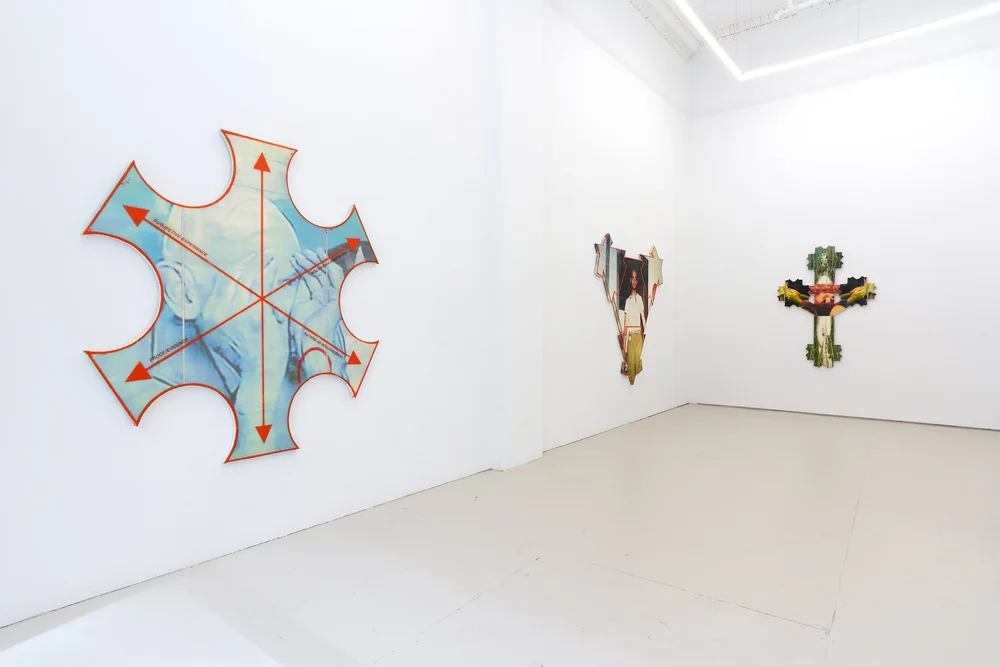
To encounter the work of Nina Hartmann is to experience the uneasy thrill of stumbling into a space where one is not entirely certain they were meant to be. Her panels and sculpted reliefs possess the ambered glow of preserved specimens—objects that seem dug up from an illicit archaeological site or salvaged from the back room of a shuttered lodge. In a contemporary art landscape often dominated by slick digital surfaces or bloodless conceptualism, Hartmann’s tactile material universe feels raw, vital, and intoxicatingly enigmatic.
Working across resin, pigment, carved wood, and found ephemera, Hartmann constructs layered surfaces that function as ritual instruments as much as visual artworks. There is a palpable weight to her craft; you sense the hours spent pouring, embedding, distressing, and excavating. Her surfaces lock away disparate fragments—symbols borrowed from esoteric geometry, references to fringe countercultures, law-enforcement interrogation charts, and archival iconography. Suspended beneath layers of translucent resin, these elements appear both immortalized and suffocated, frozen in a state of permanent amber preservation.
What makes Hartmann’s vision so compelling is not merely its aesthetic seduction, but its razor-sharp psychological intuition. We inhabit a culture haunted by secrecy. Between algorithm-fueled rabbit holes, declassified files, and a pervasive societal suspicion that reality is orchestrated behind closed doors, our collective psyche has become deeply conspiratorial. Hartmann does not mock this impulse, nor does she passively illustrate it. Instead, she approaches suspicion as a contemporary form of belief, treating our obsession with hidden truths with the ceremonial reverence typically reserved for medieval reliquaries.
This atmospheric tension was captured with striking precision in her solo exhibitions at Silke Lindner in New York. Viewing her work in a gallery context reveals an artist operating with immense sculptural discipline. Her panels refuse to sit flatly on the wall as mere paintings; they assert themselves as heavy architectural tablets. The light filters through her semi-opaque cast mediums, catching the edges of embedded hardware and etched typography. Standing before them, one feels the visceral pull of the forbidden. The viewing experience mimics the sensation of leafing through an unredacted dossier by candlelight, where every recurring emblem hints at an underlying logic just out of reach.
Hartmann’s visual vernacular draws extensively from American subcultures, survivalist aesthetics, secret societies, and the peculiar vernacular of dive-bar jukeboxes and biker insignias. Yet, her practice avoids irony. There is a deep, almost devotional empathy embedded in her handling of materials. She recognizes that whether human beings turn to ancient mysticism, radical politics, or clandestine lore, they are driven by the same fundamental yearning: the desire to locate coherence in a chaotic world, to believe that behind the noise of existence lies an organizing pattern.
Her presence in group presentations and institutional projects—including exhibitions documented through spaces like The Hole and contemporary alternative project spaces across the United States and Europe—has steadily cemented her reputation among a vanguard of collectors who seek emotional friction rather than easy decoration. Her objects do not flatter an interior with polite minimalism; they charge it with quiet electric hums of mystery and history. They ask the viewer to lean in, to inspect the strata of resin and dust, and to reckon with their own threshold of belief.
In the end, Hartmann’s work acts as a mirror to our current condition. She captures the delicate point where curiosity collapses into obsession, and where skepticism morphs into a private religion. By transforming cultural anxiety and fringe mythologies into objects of profound, enduring beauty, Nina Hartmann proves that the most evocative art being made today does not hand us neat answers—it dares us to linger in the shadows of what we cannot prove.
Curated Publications
Essential monographs and criticism, selected by our editors.
